ENERGY CARBON GUIDE & INSIGHT
Are we serious about saving the planet – or are we just ticking boxes?

From the Energy Carbon archive. This article records the project, announcement or viewpoint at its original publication date. For a new installation, use the current product details and project-specific specification.
The story
 Before coronavirus, at least, it was hard to get away from talk about climate change.
Schoolchildren were striking, scientists were issuing increasingly dire forecasts, and seemingly every brand on the planet was trying to convince us that they were passionately committed to sustainability.
However, it was a lot rarer to see any of that talk translated into action.
At times, it feels like ‘sustainability’ is at risk of becoming just another corporate buzzword that every business has to say it signs up to, but doesn’t mean much beyond the flashy marketing.
The latest report from the UK’s Committee on Climate Change seemed to recognise this – calling for the country to overhaul its approach to sustainability, and reminding us that while the challenge ahead of us is daunting, it can and must be achieved using the sustainable technology we have now.
‘Net zero’ is another of those phrases you hear a lot, but it’s important to grasp exactly what it entails.
To reach net zero carbon emissions, we need to almost totally eliminate the carbon produced by building, heating, power generation, transport, manufacturing and every other area of human activity – and find ways of removing emissions that are completely unavoidable from the atmosphere.
The scale of the task ahead of us is staggering – and if we’ve got any chance of achieving that daunting objective by 2050, every business in Britain needs to be taking action.
In heating and construction more broadly, the sector we specialise in, it’s especially urgent.
Between now and 2050, in fact, heating is likely to be the key battleground in the fight for zero carbon – and it’s time that the construction sector acknowledged that.
There’s no magic bullet solution to low-carbon heating, and in 2050, we’re likely to draw on a variety of different technologies to help us heat homes both sustainably and efficiently.
Air-source and ground-source heat pumps could be part of the solution – but they come with their own issues.
That means a huge amount more embodied carbon – and many heat pump products use refrigerants that themselves contribute to global warming when they’re released into the atmosphere.
What’s more, heat pumps are extremely complex products – meaning any maintenance or replacement work requires the services of specialist engineers.
Fit it … forget it – could far-infrared lead the way?
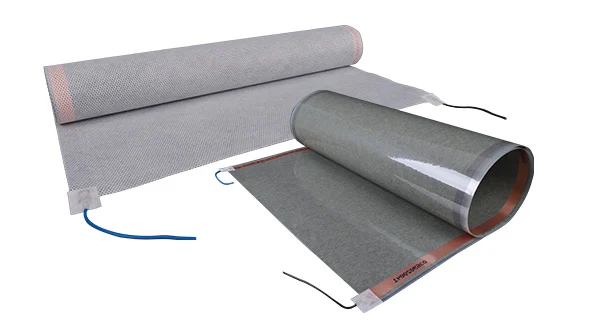
However, we believe the solution with the biggest potential to help make British homes fit for 2050 is far-infrared heating.
Students at the University of Stuttgart worked for six years to perfect a infra-red heating solution that was easy to fit, extremely energy efficient, and exceptional enough to earn some of Germany’s most stringent accreditations, including TUV certification.
Far-infrared radiation warms the objects in a room, rather than the empty space – and those objects then go on to radiate heat themselves.
It’s extremely durable with a design life of 50+ years – you, fit it … forget it.
It’s also zone controllable, the app can integrate with all smart devices, and, crucially, uses much less energy than other forms of direct electric heating – we believe it will make a major contribution to the collective effort to reach zero carbon by 2050.
Related guides and products
PLAN YOUR PROJECT
Plan the heating around your building
Tell us about the property, the rooms and the planned work. We will help identify suitable product options and the information needed for a detailed proposal.