
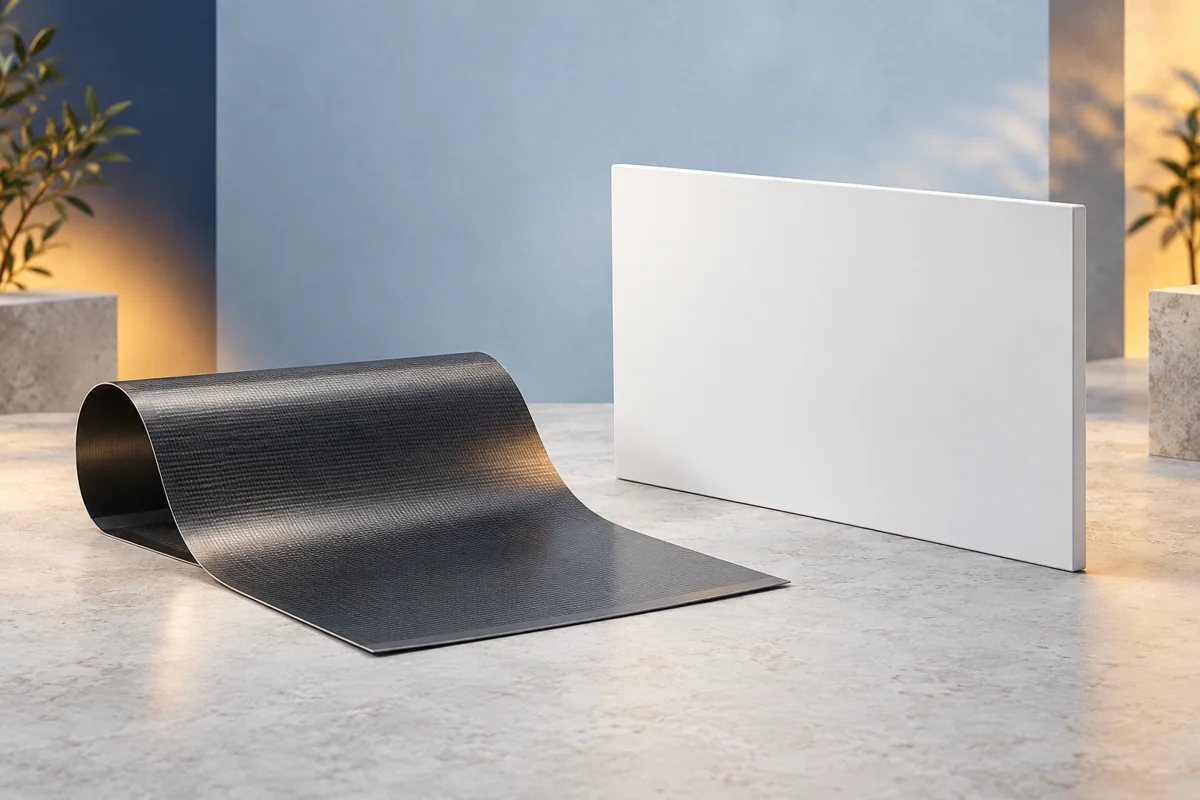
AI-generated conceptual illustration; not specific product photography · Heating choices for UK homes
Comparing infrared heating film vs panels? Both use electricity to provide radiant warmth, but they fit into a home in different ways. Film can become part of a suitable ceiling, wall or floor construction. Panels are separate appliances fitted in an approved position.
The useful question is which approach suits your building, refurbishment plans and room use. This guide compares appearance, installation, comfort, controls and running costs so you can ask better questions before winter.
TWO WAYS TO PLAN RADIANT WARMTH
Infrared heating film vs panels: at a glance
| Consideration | Concealed heating film | Infrared panels |
|---|---|---|
| Appearance | Integrated into an approved construction and finish. | A visible appliance, with finishes varying by model. |
| Installation timing | Often considered during renovation or new construction. | May suit finished rooms where surface mounting is acceptable. |
| Heated surface | Can distribute heat over a larger designed area. | Heat comes from each panel’s surface; number and position matter. |
| Controls | Compatible thermostats, sensors and power supplies form part of the design. | Control options depend on the panel and installation. |
| Future access | Keep layout records and agree access to serviceable components. | The appliance is generally accessible, subject to mounting arrangements. |
| Running costs | Depend on measured electricity use, controls and tariff. | Depend on measured electricity use, controls and tariff. |
There is considerable variation within both categories. Compare specific products and complete installation proposals, rather than assuming every film or panel behaves the same way.
THE FINISH YOU WANT
Concealed carbon film or a visible heating panel?
Where infrared heating film fits
Carbon film heating can appeal when clear walls and an uninterrupted interior finish are priorities. Energy Carbon’s range includes options for suitable drylining, plaster and floor applications. The chosen product determines the permitted construction and finish.
If you are already replacing ceilings, coordinating heating with that work may be practical. Our infrared ceiling heating page explains the main design considerations. Check the product range and request the relevant installation instructions.
Where infrared panels fit
A panel may be worth considering when the room is already decorated and you want an accessible appliance. Wall and ceiling mounting options depend on the model. Ask how positioning, clearances, wiring and any visible controls will affect the room.
Neither option should be sized using floor area alone. Glazing, insulation, external walls, ceiling height and the temperatures required all affect the heating design.
LOOK BEYOND THE WATTAGE
How do film and panels affect comfort?
Two heaters with the same rated power can produce different local sensations because the heated surface area and position differ. A distributed surface and a concentrated panel create different radiant patterns. That makes room layout an important part of the comparison.
It does not mean panels always create uncomfortable hot spots or that film automatically makes every part of a room equally comfortable. Good design considers the surfaces around occupants, furniture, room use and the building’s heat loss.
Ask the supplier to explain coverage and likely comfort where you actually sit, work or relax. Our guide to mean radiant temperature explains why air temperature alone does not tell the whole story.
COMPARE THE COMPLETE BILL
Is infrared heating film cheaper to run than panels?
There is no universal answer. Both are direct electric heating. If two complete systems consume the same electricity at the same tariff, their electricity cost is the same. Rated wattage describes power, not the final winter bill.
A thermostat may cycle heating on and off, so three scheduled hours need not mean three hours at full power. Include power-supply and control consumption when comparing systems.
What can change actual electricity use?
Insulation, weather, set temperatures and occupancy affect demand. Room controls can help avoid heating spaces unnecessarily, while keeping appropriate background conditions. Smart tariffs may change the price paid at different times, but only when heating can be scheduled without compromising comfort.
Read our infrared heating running-cost guide and winter guide to zoned heating for practical planning.
Also compare alternatives: a heat pump can provide the same useful heat using less electricity than direct electric heating. The Energy Saving Trust’s independent infrared heating guidance is a useful starting point. Include installation and a separate hot-water solution where required.
MATCH THE SYSTEM TO YOUR PROJECT
Which option should you choose?
Planning a renovation?
Explore concealed film while ceilings or other suitable surfaces are accessible. Agree the finish and heating layout before construction starts.
Keeping existing finishes?
Compare the disruption of concealed installation with a suitably positioned panel. Include electrical work and making good in both quotations.
Replacing whole-house heating?
Request room-by-room calculations, control details and a hot-water plan. Compare whole-system costs against other suitable heating options.
Five questions to ask before ordering
- What room-by-room heat-loss calculation supports this proposal?
- Where will the heated surfaces, controls and serviceable components go?
- Which construction, finish and installation instructions apply?
- What electricity consumption and tariff assumptions support the cost estimate?
- What commissioning, warranty and aftercare arrangements are included?
COMMON QUESTIONS
Heating film and panel FAQs
Does low voltage automatically mean lower running costs?
No. The bill depends on electricity consumed, not voltage alone. Check the complete system’s input consumption and use the same tariff assumptions when comparing proposals.
Can either system provide domestic hot water?
These are space-heating options. Plan hot water separately if you are replacing a system that currently provides both.
Can I use film and panels in the same property?
A mixed approach may be possible, but each room still needs a suitable heating design. Agree compatible controls and electrical requirements with the relevant suppliers and installer.
START WITH YOUR BUILDING
Explore concealed heating for your project
Share your floor plans, room-use pattern and refurbishment plans with Energy Carbon. Discuss whether carbon film is suitable and what a complete proposal should include.
Discuss your heating options