Latest News

For decades, gas boilers have been the default heating choice in British homes. They’ve been familiar, relatively affordable, and deeply embedded into the UK’s infrastructure. But as conversations around sustainability, energy efficiency, and long-term environmental impact continue to grow, many homeowners are beginning to ask an important question:
The conversation around climate change is no longer limited to scientists and campaigners. Today, it shapes government policy, building regulations, energy planning, and the way homeowners think about comfort and running costs.
Yet despite this shift, gas boilers continue to be installed across the UK every day, even while the country prepares for a lower-carbon future.
This raises a difficult but necessary discussion about how the heating industry moves forward responsibly.
Yes. The UK government has announced long-term plans to reduce the use of fossil fuel heating systems in favour of lower-carbon alternatives. While existing gas boilers are not being banned immediately, new-build properties are expected to transition towards more sustainable heating technologies over the coming years.
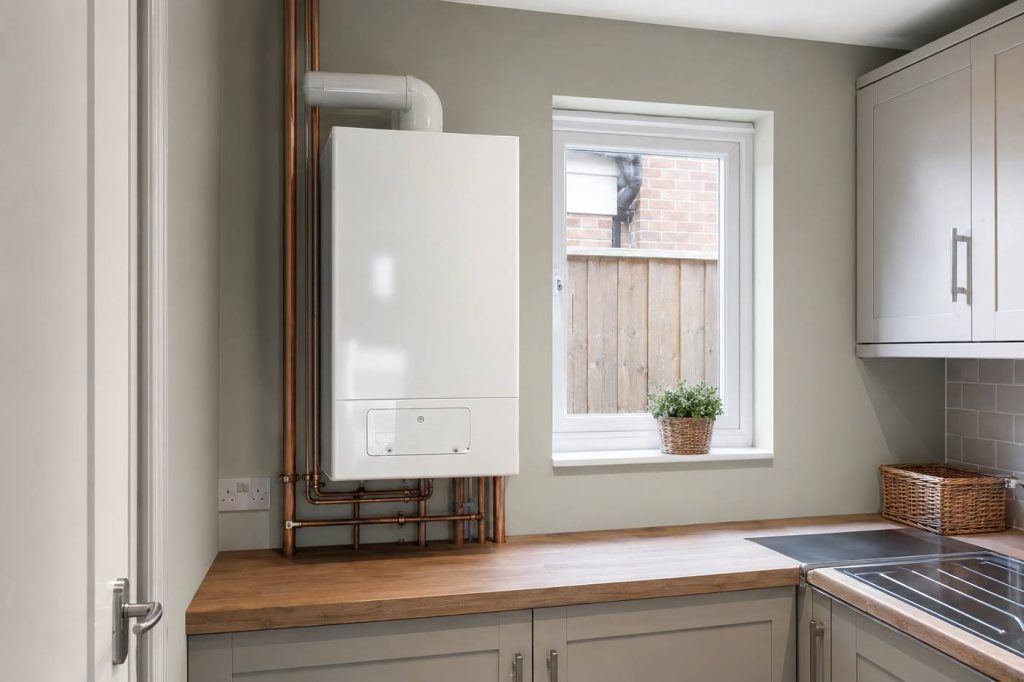
The UK has historically relied more heavily on gas heating than most countries in Europe. Millions of homes were designed around central heating systems powered by natural gas, making boilers the standard solution for decades.
At the time, this made practical sense. Gas infrastructure was already widespread, and boiler systems offered a relatively inexpensive way to heat homes.
But the situation has changed.
Today, the focus is no longer only on short-term convenience. Modern heating discussions now include:
As these priorities evolve, many experts agree that the heating industry must also evolve.
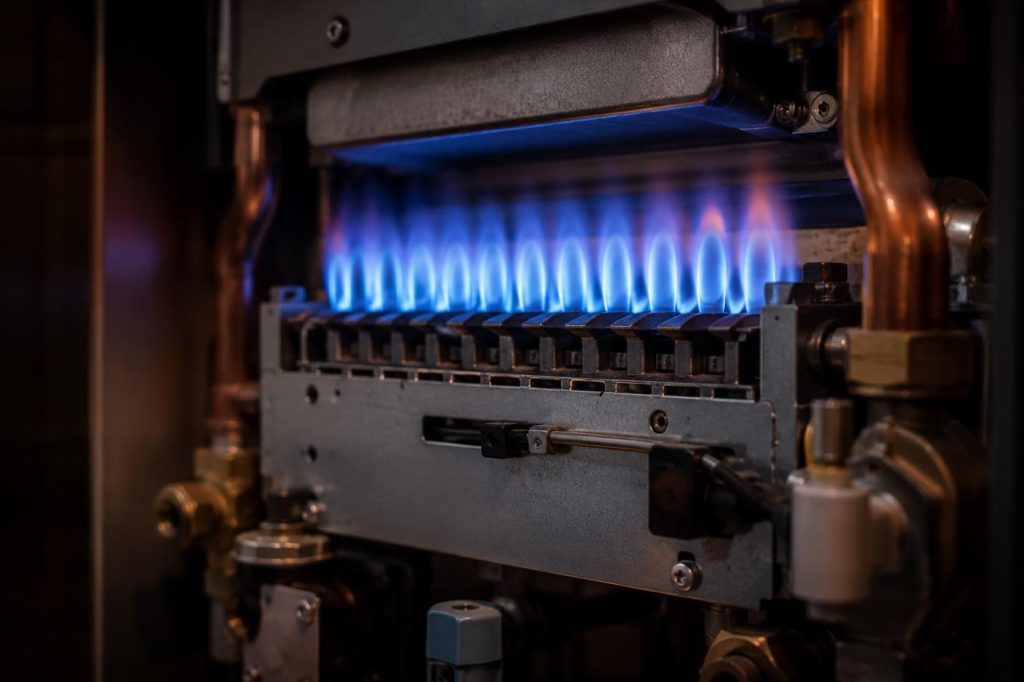
Gas boilers rely on fossil fuels. Even modern condensing boilers still burn natural gas to generate heat.
This creates two major long-term concerns.
Heating remains one of the largest contributors to household carbon emissions in the UK. Reducing reliance on fossil fuels is considered an important part of wider climate goals.
Installing heating systems designed around fossil fuels today may create future complications as regulations, energy markets, and building standards continue to evolve.
Many homeowners are now questioning whether investing heavily in traditional gas infrastructure still makes sense in the long term.
One of the biggest changes in recent years is that sustainability is no longer treated as a niche topic.
Homeowners are becoming increasingly aware of:
This has encouraged a wider discussion about whether the heating sector should move faster towards lower-carbon technologies.
The reality is that transitioning away from gas is not simple.
The UK’s infrastructure still faces several major challenges:
But difficult challenges do not remove the need for long-term planning.
The heating industry now has an opportunity to invest in systems designed for the future rather than relying entirely on legacy technologies.
Several lower-carbon heating technologies are now becoming more common across residential and commercial projects across the UK.
An infrared heating system works differently from traditional convection heating systems.
Rather than primarily heating the air, infrared systems warm surfaces and objects within a room, helping create a more balanced radiant environment.
Potential benefits may include:
Infrared systems are increasingly being explored in:
Air source and ground source heat pumps are also becoming more widely discussed throughout the UK.
These systems can support lower-carbon heating when paired with well-insulated buildings, although installation suitability varies depending on property type and infrastructure.
| Feature | Gas Boilers | Infrared Heating | Heat Pumps |
|---|---|---|---|
| Energy Source | Natural Gas | Electricity | Electricity |
| Maintenance | Regular servicing required | Minimal maintenance | Moderate maintenance |
| Heat Style | Air convection | Radiant warmth | Air/water transfer |
| Carbon Reduction Potential | Fossil-fuel-based | Supports electric heating transition | Lower-carbon operation |
| Installation Complexity | Familiar infrastructure | Flexible installation options | May require upgrades |
| Suitability | Existing gas-connected homes | Residential & commercial spaces | Efficient buildings |
One of the biggest shifts in heating discussions is the growing understanding of thermal comfort.
Traditional heating systems often focus heavily on air temperature alone. However, human comfort is influenced by more than just warm air.
Cold surfaces, poorly insulated walls, and uneven room temperatures can still make spaces feel uncomfortable even when thermostats show higher readings.
This is why modern heating conversations increasingly focus on:
The goal is no longer simply heating the air. It’s about creating healthier and more balanced indoor environments.
The UK heating sector is clearly moving towards lower-carbon technologies, although the transition will take time.
What matters most now is making informed long-term decisions rather than short-term reactive ones.
For homeowners, this means:
No single heating technology is perfect for every property. But the direction of travel is becoming increasingly clear.
The future of home heating is likely to focus more heavily on:
Sustainable building performance
Existing gas boilers are not expected to be removed from homes immediately, but the UK is gradually moving towards lower-carbon heating systems for future developments.
The best alternative depends on the property. Infrared heating, heat pumps, and hybrid systems are among the technologies currently being explored across the UK.
Infrared heating can be suitable for many residential and commercial spaces, particularly when combined with good insulation and efficient building design.
Electric heating systems may support lower-carbon heating strategies when powered by renewable electricity sources.
Thermal comfort affects how warm a room actually feels. Surface temperatures, radiant heat, and insulation quality all contribute to comfort levels inside a property.
As the UK moves towards more sustainable living, many homeowners are beginning to explore smarter heating alternatives beyond traditional gas systems. Technologies like infrared heating for homes are becoming part of the wider conversation around energy efficiency, thermal comfort, and future-ready living.
The future of heating is not just about warming spaces. It’s about creating healthier, more efficient homes designed for the years ahead.
Whether you’re researching infrared heating, planning a renovation, or simply exploring sustainable alternatives to traditional heating systems, our team is here to help you understand the options available for your property.

Energy Carbon delivers advanced infrared heating systems designed for modern, energy-efficient homes.
0791 760 8278
© Copyright Energy Carbon Ltd 2026 | Company no. 11341124