

The Future of Gas Boilers in UK Homes: Why the Heating Industry Must Change For decades, gas boilers have been the default heating choice in British homes. They’ve been familiar, relatively affordable, and deeply embedded into the UK’s infrastructure. But as conversations around sustainability, energy efficiency, and long-term environmental impact continue to grow, many homeowners are beginning to ask an important question: Why are we still building the future around fossil fuel heating? The conversation around climate change is no longer limited to scientists and campaigners. Today, it shapes government policy, building regulations, energy planning, and the way homeowners think about comfort and running costs. Yet despite this shift, gas boilers continue to be installed across the UK every day, even while the country prepares for a lower-carbon future. This raises a difficult but necessary discussion about how the heating industry moves forward responsibly. Are gas boilers being phased out in the UK? Yes. The UK government has announced long-term plans to reduce the use of fossil fuel heating systems in favour of lower-carbon alternatives. While existing gas boilers are not being banned immediately, new-build properties are expected to transition towards more sustainable heating technologies over the coming years. The UK’s Long Relationship With Gas Heating The UK has historically relied more heavily on gas heating than most countries in Europe. Millions of homes were designed around central heating systems powered by natural gas, making boilers the standard solution for decades. At the time, this made practical sense. Gas infrastructure was already widespread, and boiler systems offered a relatively inexpensive way to heat homes. But the situation has changed. Today, the focus is no longer only on short-term convenience. Modern heating discussions now include: Energy efficiency Environmental impact Carbon reduction Indoor thermal comfort Long-term sustainability Future energy resilience As these priorities evolve, many experts agree that the heating industry must also evolve. Why Gas Boilers Are Under Increasing Pressure Gas boilers rely on fossil fuels. Even modern condensing boilers still burn natural gas to generate heat. This creates two major long-term concerns. Carbon Emissions Heating remains one of the largest contributors to household carbon emissions in the UK. Reducing reliance on fossil fuels is considered an important part of wider climate goals. Future Infrastructure Challenges Installing heating systems designed around fossil fuels today may create future complications as regulations, energy markets, and building standards continue to evolve. Many homeowners are now questioning whether investing heavily in traditional gas infrastructure still makes sense in the long term. A More Honest Conversation About Sustainability One of the biggest changes in recent years is that sustainability is no longer treated as a niche topic. Homeowners are becoming increasingly aware of: Energy usage Building efficiency Indoor comfort Air quality Long-term heating costs Environmental responsibility This has encouraged a wider discussion about whether the heating sector should move faster towards lower-carbon technologies. The reality is that transitioning away from gas is not simple. The UK’s infrastructure still faces several major challenges: Electrical grid demand Housing stock compatibility Retrofit complexity Consumer affordability Installation costs But difficult challenges do not remove the need for long-term planning. The heating industry now has an opportunity to invest in systems designed for the future rather than relying entirely on legacy technologies. Modern Heating Alternatives for UK Homes Several lower-carbon heating technologies are now becoming more common across residential and commercial projects across the UK. Infrared Heating An infrared heating system works differently from traditional convection heating systems. Rather than primarily heating the air, infrared systems warm surfaces and objects within a room, helping create a more balanced radiant environment. Potential benefits may include: Low maintenance requirements Quiet operation Flexible installation options Even thermal comfort Compatibility with renewable electricity sources Infrared systems are increasingly being explored in: Residential homes Heritage properties Offices Educational spaces Commercial buildings Heat Pumps Air source and ground source heat pumps are also becoming more widely discussed throughout the UK. These systems can support lower-carbon heating when paired with well-insulated buildings, although installation suitability varies depending on property type and infrastructure. Traditional Boilers vs Modern Heating Systems Feature Gas Boilers Infrared Heating Heat Pumps Energy Source Natural Gas Electricity Electricity Maintenance Regular servicing required Minimal maintenance Moderate maintenance Heat Style Air convection Radiant warmth Air/water transfer Carbon Reduction Potential Fossil-fuel-based Supports electric heating transition Lower-carbon operation Installation Complexity Familiar infrastructure Flexible installation options May require upgrades Suitability Existing gas-connected homes Residential & commercial spaces Efficient buildings Why Thermal Comfort Matters More Than Air Temperature One of the biggest shifts in heating discussions is the growing understanding of thermal comfort. Traditional heating systems often focus heavily on air temperature alone. However, human comfort is influenced by more than just warm air. Cold surfaces, poorly insulated walls, and uneven room temperatures can still make spaces feel uncomfortable even when thermostats show higher readings. This is why modern heating conversations increasingly focus on: Radiant warmth Surface temperatures Heat distribution Building fabric performance Overall comfort experience The goal is no longer simply heating the air. It’s about creating healthier and more balanced indoor environments. The Future of Heating in the UK The UK heating sector is clearly moving towards lower-carbon technologies, although the transition will take time. What matters most now is making informed long-term decisions rather than short-term reactive ones. For homeowners, this means: Understanding heating options properly Thinking beyond upfront costs alone Considering long-term efficiency and comfort Planning for future energy standards No single heating technology is perfect for every property. But the direction of travel is becoming increasingly clear. The future of home heating is likely to focus more heavily on: Electrification Energy efficiency Thermal comfort Smart energy integration Sustainable building performance FAQs Will gas boilers be banned in the UK? Existing gas boilers are not expected to be removed from homes immediately, but the UK is gradually moving towards lower-carbon heating systems for future developments. What is the best alternative to a gas boiler? The best alternative depends on the property. Infrared heating, heat pumps, and

Dear Boris: three key steps to net zero
Dear Boris, We know you’ve got a lot on your plate at the moment – but we need to talk about the environment. Earlier this year, you made the momentous commitment to cut the UK’s carbon emissions by 78% between now and 2035 – a pledge you’ve since enshrined in law. It’s not just the most ambitious carbon reduction target any developed nation has set so far – it’s a clear indication that you and the government more generally recognise the seriousness of the environmental crisis we face. But here’s the thing – pledges on their own are meaningless. Don’t get us wrong – this isn’t meant as an attack. As we’ve said already, you’ve gone further than any major world leader in committing to hugely ambitious cuts in carbon emissions. But now we need to see action. The scale of the challenge we face is frankly terrifying. In terms of its potential negative impact, climate change dwarfs the coronavirus crisis. Essentially, what we’re dealing with here is the future of our species. And without radical action literally in the space of years, it’s very possible it may not have one. So here are three things we think have the potential to supercharge the national effort to reach net zero by 2050 – and that the government should commit to immediately. Number 1: stop all support for the fossil fuel industry When a petition calling on the government to stop subsidising fossil fuels reached 10,000 signatures last year, the point at which ministers have to provide a written response, your colleagues unfortunately gave a typical politician’s reply. “The UK does not give subsidies to fossil fuels”, they said. A 2019 report by the European Commission begged to differ, finding that we provide over £10bn in support to the fossil fuel sector every year, more than any other country on the continent. What’s more, Greenpeace allege that the government’s UK Export Finance arm has funded £6bn of fossil fuel projects around the world since 2010. In November last year, we were pleased to see you commit to ending all government investment in coal, oil and gas overseas. But the crucial question is – when? And if and when that policy does come into force, can you guarantee it will be loophole-free? Number 2: embrace the potential of renewables The UK needs to be generating all its electricity renewably in the space of years, not decades. Possibly the quickest and most effective way of doing that is to embrace the country’s huge potential for offshore wind generation. A report by consultants BVG Associates claims that the UK can be generating 25 gigawatts more wind energy by 2030, which would be enough to power three-quarters of the country’s 29 million households. The same study found that Britain is by far the most suitable country for large-scale wind power generation in the world – and what’s more, there’s never been a better time to invest in it. The price of offshore wind power fell by 32% between 2012 and 2016, and a 2020 report by your own Department for Business, Energy and Industrial Strategy found the cost of renewables more generally is up to 50% cheaper than previously thought. There’s also huge potential for solar in Britain – the Welsh government is already striving to make every home its own power plant with the use of PV, and one study suggests that installing solar panels on 61% of the country’s south-facing commercial buildings would meet the power needs of every business in the country. Number 3: Put a proper funding infrastructure for retrofit projects, green businesses and sustainable technologies in place There’s no way around it – the Green Homes Grant was a bit of a flop. We understand it was probably put together at speed, and have no doubt it was extremely well intentioned. But it was overly complicated for both homeowners and the trade, and, at £2bn, a drop in the ocean given the scale of the challenge we face. In its place, we need a comprehensive programme of government grants to help homeowners across the country retrofit their homes. We need grants to support green start-ups, and the development of new green technologies in every field. We need to quickly authorise the use of proven emerging technologies like Phase Change hot water boilers and infrared heating – both of which are easy to implement, ready to go, and have been comprehensively tried and tested in Europe, but are currently excluded from SAP. And we need to make sure that the banks are lending to the entrepreneurs at the cutting-edge of the sustainability revolution. History shows us that it’s often not the rich, powerful, long-established businesses that drive innovation, but smaller, more agile ones that are willing to take risks. If the financial sector doesn’t support these businesses, we’ll all be much worse off as a result. The time for action is now These are just three steps we think are critically important if we’re going to successfully slash the UK’s carbon emissions in the decades ahead. We’re sure there are many others. In fact, we’d encourage anyone else reading this to write in and tell us the things you want to see the government doing to accelerate the drive to net zero – you can email us at hello@energycarbon.co.uk Because it’s only by drawing on the skills and expertise of talented people from every sector, that we’ve got any chance of preventing a crisis with dire consequences for everyone on Earth. Yours sincerely, Nick and Rod If you’re interested in learning more, please call 0203 507 1659 or visit www.energycarbon.co.uk.

Green trailblazers Galion Limited embrace the heating of the future
Trailblazing sustainable housebuilder Galion Limited have become the latest firm to embrace the potential of Energy Carbon’s state-of-the-art Far-Infrared heating technology. Glastonbury-based Galion specialise in beautifully crafted, traditional new home developments designed to deliver bespoke, spacious and eco-friendly living spaces that encourage community cohesion. In their bid to make their homes as sustainable as possible, the company reached out to Energy Carbon, intrigued by what infrared heating had to offer. “When Galion approached us, we were immediately impressed with their outlook,” comments Energy Carbon director Nick Gander. “For some companies, ‘going green’ is just a box-ticking exercise. But Galion clearly don’t do sustainability by halves. Cost wasn’t an issue – they just wanted the best eco-friendly heating system they could find.” Galion’s properties will incorporate solar panels on the roofs, locally sourced natural stone, electric vehicle charging points and more. With Energy Carbon’s cutting-edge heating tech, they hope to push the envelope of sustainable construction even further. In contrast with conventional heating technology, that works by warming the air, Energy Carbon’s innovative products work by harnessing the power of infrared. Heating the surfaces in a room rather than the empty space, they allow homeowners to switch it on and be feeling the benefits much more quickly than traditional heating – which means lower electricity bills as a result. An ongoing test house experiment run by Energy Carbon in Germany has found that this technology can reduce overall electricity use by as much as 26%. Capable of heating rooms up to 28.7 degrees Celsius while retaining safe, low surface temperatures of no more than 41 degrees, the products can be quickly and easily plastered into ceilings or inserted behind plasterboard, meaning they’re not only green, but builder-friendly too. Energy Carbon co-director Rod Davies comments: “In many cases, it’s not the big major developers who make the first move when it comes to innovative new technologies. “We often find it’s the smaller, more agile companies that are willing to embrace new ideas – an approach that Galion perfectly encapsulates. They’ve already gone further on sustainability than many of the UK’s housebuilders, and we’re delighted to be working with them.” Give us a call on 0203 507 1659 or email hello@energycarbon.co.uk

Getting set for Passivhaus, and a new transformer!
We’re delighted to be able to unveil two new innovations this month. The first is our 60-watt infrared heating fleece, that’s been specifically designed for homes being built to Passivhaus standard. Passivhaus – literally ‘Passive House’ in German – is widely accepted as the world’s most stringent and respected standard of home energy efficiency. Passivhaus buildings provide an exceptional level of occupant comfort, while using very little energy for heating and cooling – and we expect to see the numbers of them increase significantly in coming years, as the UK strives to meet its new target of 78% less carbon emissions by 2035. Our 60-watt fleece will allow us to offer fantastic infrared heating in even the most demanding of settings. Meanwhile, we’ve launched a new whole-house transformer for use with our heating products. When you use lots of smaller transformers on a project, it can quickly get messy and complicated – and you’re often left with lots of outlets you don’t need. With our new transformer, you can cover up to ten zones with a single unit, which keeps things much neater, and makes the installer’s life much easier. If you’d like to learn more, don’t hesitate to contact Energy Carbon today! Call 0203 507 1659 or email hello@energycarbon.co.uk.
One finalist spot and two prestigious award wins
We’re celebrating not only being named a finalist in the Green Homes Awards, but winning both a BUILD Award, and a much-sought after Plus X Award. We were one of the final few in the GHA’s Best Heating Innovation category, recognised by BUILD magazine as Best Low Carbon Heating Supplier, and received one of the Plus X Award’s highly prestigious Seals of Approval. Each year, Plus X assembles an independent panel to assess the latest offerings from thousands of different businesses around the world, rewarding those that display the most extraordinary design and outstanding functionality. We’re absolutely delighted that this year we caught their eye. It’s very fitting that Plus X is a German award scheme. Our far-infrared heating is itself made in Germany, from designs produced by experts at the University of Stuttgart. That means it’s not just got an exceptional pedigree, but that it’s been tested to some of the most stringent standards in the world. It’s been independently tested and certified by TUV Rheinland, and meets all the requirements of the OKO Design Directive. If you’re interested in learning more, please call 0203 507 1659 or email hello@energycarbon.co.uk
Whatever replaces the Green Homes Grant, it has to go much further
For anyone interested in seeing the government take the bull by the horns and tackle the single greatest issue of our time, it’s been a confusing and frustrating few months. As we’re all very aware, back in 2019 the UK became the first of the world’s developed countries to commit itself to achieving net-zero carbon by 2050. But two years later – only partially excused by the disruption brought on by coronavirus – progress has been extremely slow. In March, the Environmental Audit Committee of the House of Commons rebuked the government for its failure to act – and, in particular, for ignoring the critical importance of decarbonising Britain’s housing stock, which accounts for a huge share of the country’s carbon emissions. Far from taking the criticism on board, however, just a few weeks later the government was announcing the cancellation of its £2bn Green Homes Grant. In of itself, that wasn’t especially devastating – the scheme was complex, confusing and poorly received by firms throughout the construction sector. Benefitting from it as a product supplier or installer was costly and time-consuming, and the application process for homeowners was far from straightforward. But given the enormous scale of the climate crisis, the UK needs to be taking drastic action to decarbonise its built environment – and at the moment, ministers have announced nothing substantial to replace it. In a year when the UK is supposedly demonstrating its commitment to sustainability by hosting the world’s biggest climate conference, COP26, that’s inexcusable – and, given what the government would go on to announce next, quite baffling. 78% less emissions by 2035 The UK was a sustainability trailblazer when it committed to net-zero by 2050. But in April, the government declared it wanted to go further – now, Britain will have to cut carbon emissions by 78% by 2035. We think that’s totally the right decision. Without introducing some sort of stepping stone to 2050, the risk was that companies would drag their feet, leave taking the difficult decisions until about 2045, then find themselves faced with the impossible task of trying to totally decarbonise in the space of a few years. But if the government doesn’t quickly come forward with a package of radical measures to make net-zero a reality in the built environment, that 2035 commitment is laughable – not worth the paper it’s written on. Time to put our money where our mouth is What’s most frustrating is that it should be so simple. What are the two biggest crises we currently face as a nation? Climate change, and the pandemic – both its public health impact, and the huge damage it’s done to the economy. Here’s a way the government could help tackle both. Train the thousands of people who’ve lost their jobs in retail, hospitality, tourism and other sectors to retrofit buildings – the Energy Efficiency Infrastructure Group thinks investment in net-zero could create 150,000 jobs. Then, give grants for energy-efficiency improvements to every household in the country. Remove all the complex eligibility criteria, and make it simple – just give it to everyone. Would that be expensive? Of course it would. But you can’t put a price on the future – and Britain has long lagged behind other countries in its willingness to spend for the good of the planet. When you look back on it now, the Green Homes Grant was nowhere near big enough to meet the scale of the challenges we face. Without a drastic change in the space of a few years, large parts of the planet could become uninhabitable in our lifetimes. COVID saw the UK economy shrink by 9.9% last year, the single greatest contraction in the country’s recorded history. And as a nation, our response was to allocate £2bn. For a government, that’s pocket change. They’re set to spend £12bn renovating the House of Commons. In Germany, by contrast, they’ve committed $46bn to investments in sustainability in just the last year. These are the sorts of figures we need to see if we’re going to have any impact on the climate crisis, let alone cut carbon emissions by almost 80% in the next 15 years. The need for simpler heating If we were to roll out the sort of scheme we’ve outlined above – a mass programme of government-supported retrofitting – there’s still one big issue we’d have to overcome. Much of the sustainable heating technology that’s out there, including the air and ground-source heat pumps favoured by the government, are extremely complicated, and require specialist engineers to install and maintain. To bring about the sort of mass rollout that’s urgently required, we need heating tech that’s much simpler, and can be installed much more quickly and easily – and at Energy Carbon, that’s what we’re dedicated to providing. The bottom line is this. If we want future generations to have a planet they can live on, we need to take bold action now – and if we don’t, all the government’s ‘targets’ and ‘commitments’ will have been just more hot air. If you’d like to learn more, don’t hesitate to contact Energy Carbon today! Call 0203 507 1659 or email hello@energycarbon.co.uk.
E-NERGY CARBON receives Plus X Award
E-NERGY CARBON receives Plus X Award The E-NERGY CARBON system is a future-oriented electric panel heating system on a 36 V (SELV) basis for new buildings, refurbishments and renovations. The system is based on the patented PET, DRYTEC and FLEECE heating foils. E-NERGY CARBON FLEECE has now been awarded the PLUS X Award. E-NERGY CARBON FLEECE is 0.4 mm thin, diffusion-open, fleece-laminated and adhesion-optimised thanks to a flat perforation, because the wall or ceiling filler in which the foil is inserted can press through the perforation and create a secure bond to the substrate. In the same way, the heating foil can also be embedded in the tile adhesive as underfloor heating underneath the tiling. This makes E-NERGY CARBON FLEECE an ideal addition to the bathroom area and ensures a high level of comfort, e.g. directly in the wet area as a travelling shower heater or as an invisible towel radiator. These features have contributed to E-NERGY CARBON FLEECE winning the Plus X Award. But E-NERGY CARBON FLEECE can be used not only as a comfort heater in the bathroom. The possible applications of the new E-NERGY CARBON panel heating systems range from increasing comfort as temperature control in bathrooms and showers, to building protection as wall dehumidification, to use as a fully-fledged heating system in renovations or in the new construction of low-energy houses. The system works as a fast-acting demand heating system that can be operated and controlled room by room. Certified and compliant with standards In addition to the system’s own factory tests, E-NERGY CARBON has also been independently tested and certified by TÜV Rheinland. Of course, the complete system consisting of heating foil, power supply units and room temperature controllers also meets all other legal requirements, such as the specifications of the ÖKO design guideline.
Ventilation – the key to mastering mould prevention in social housing
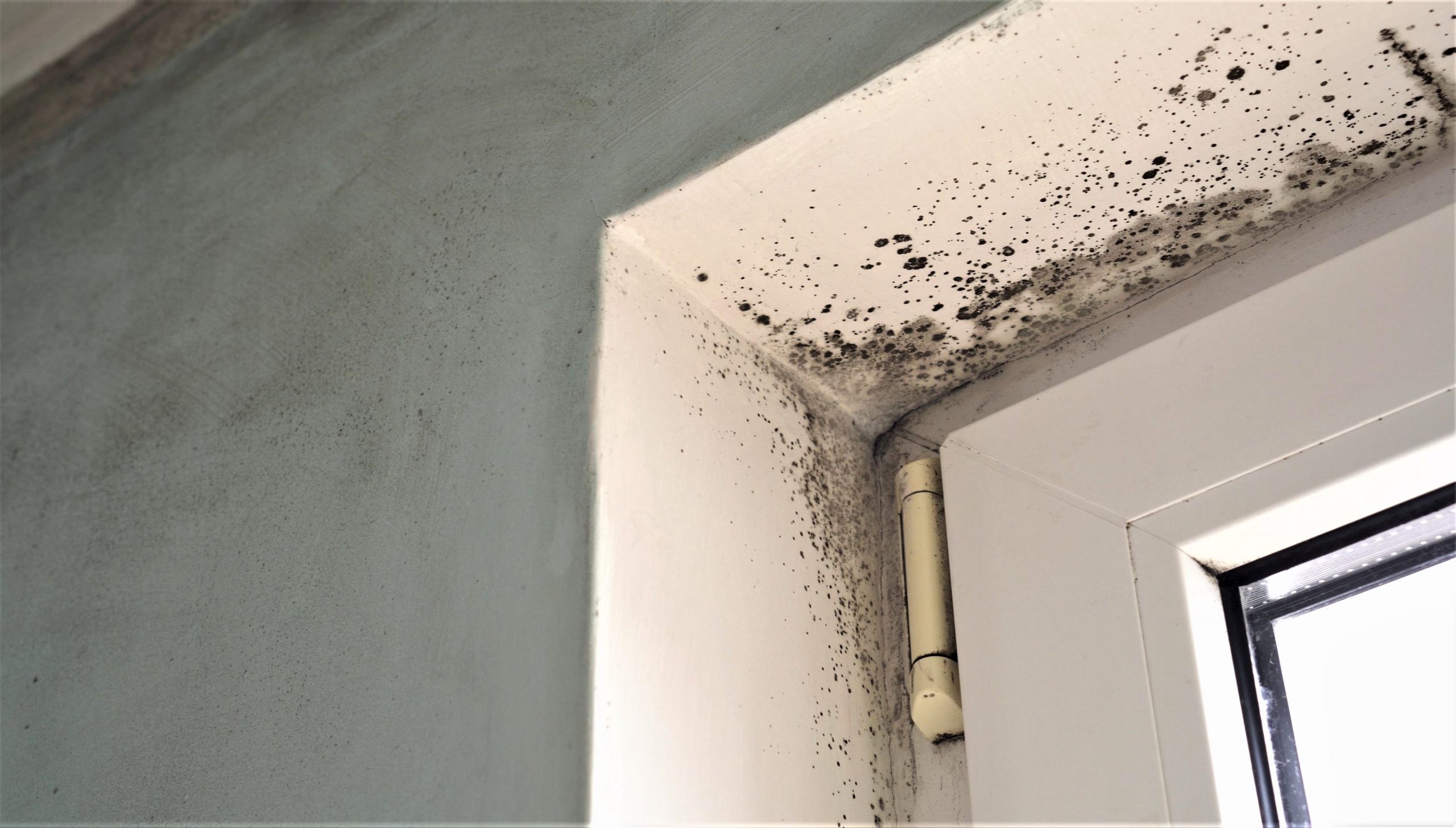
Mould is a huge issue in the social housing sector – particularly in areas with an aging housing stock. Understanding how to prevent and eradicate it means properly understanding exactly what it is, argues Nick Gander and Rod Davies of Energy Carbon. Mould – on the surface, at least – isn’t the most inspiring topic in the world. It appears in our homes. It’s annoying, and it’s hard to get rid of. But when you’re managing social housing, it’s not just a nuisance – it’s something with the potential to do huge damage to the fabric of a building, and harm the health of your residents. And to beat it, we need to get a solid grasp of what it is, and where it comes from. ‘Mould’ is the collective name for a breath-taking array of different types of fungi. If they didn’t play havoc with our bathrooms, attics and basements, they’d be excellent standard-bearers for the sustainability-obsessed, net zero age. They’re nature’s recyclers – feeding on organic matter by releasing enzymes that break it down and convert it into energy. And they exist practically everywhere, except under the sea, the coldest parts of Antarctica and the Arctic – and clean, dry, adequately ventilated rooms. Harming homes and health Why is ventilation so important? Because warmth and moisture are the two most critical things that mould needs to grow. The spores are everywhere already – even in the very air we breathe. So all it takes is for those spores to float into an area where the conditions are right for mould to take hold, then run riot. Let’s take the most infamous mould breeding ground as an example – the humble bathroom. By its very nature, it’s often damp. The air fills up with moisture. Without ventilation, that pushes up the relative humidity, which in turn creates condensation. The water droplets that form on colder surfaces go on to provide the perfect breeding ground for mould. And when it’s disturbed, more spores are released, which don’t just continue the same vicious cycle – they can cause nasal and sinus congestion, sore throats, headaches, body rashes, aches and pains and more. Break the cycle with Energy Carbon All of which means that if you want to beat mould – and spare both your housing stock and your residents from its many ill effects – you have to break that cycle. And in our view, the best way to do that is to introduce greater ventilation. Our ingenious decentralized heat recovery air ventilation product refreshes the air without increasing your energy bills, with our largest Gemini 5000 unit using a maximum of just 4 watts. The almost silent product removes stale air from inside the home – but an innovative ceramic heat accumulator collects and stores up to 98% of the heat. Then the unit draws in fresh air from outside and brings it in, using the stored heat to ensure all the warmth the heating system has generated isn’t lost. It’s extremely quick and easy to install into new builds and retrofitted in to older buildings. But it’s not the only product we offer with great mould-beating potential. We’re also experts in far-infrared heating – which provides another way of breaking the vicious mould cycle. Mainstream convection heating works by heating the air – and when that warm air comes into contact with colder surfaces, like windows, it forms moisture. In that sense, it’s quite like the weather. Water from the oceans evaporates into water vapour, that water vapour rises and cools, forming clouds which go on to produce rain. Infrared heating is different, because it warms surfaces objects and rather than the air – meaning the air doesn’t get as hot, and there aren’t any cold surfaces on which condensation can form. And together, we’re confident that our high-ventilation and far infrared heating systems offer the best way to beat mould and damp in the home. If you’d like to learn more, don’t hesitate to contact Energy Carbon today!
How airtight is too airtight?
On the surface, it seems obvious. Of course, we need to make Britain’s buildings as airtight as possible. In fact, the way we heat so many of our homes and workplaces demands high levels of airtightness. Traditional convection heating relies on radiators drawing cold air up from the floor, heating it and making it rise – then heating it again when it inevitably cools and starts to drop. It’s a slow, expensive process – and if you’ve got a house full of drafts, it’s even worse. The air you’re paying to heat quickly escapes, meaning the process has to start over and over again, with high energy bills and sizeable carbon footprints the result. But as counterintuitive as it might sound, there’s such a thing as making a building too airtight. If there’s not enough airflow into a building, you get condensation – and while it might not seem much of an issue on its own, when that condensation builds up, all kinds of other problems can come with it. A menace called mould The most obvious is mould – the fast-growing fungus that thrives in damp conditions that we’re all familiar with. Mould isn’t just an eyesore. Over time, it can eat away at the structure and fabric of a building, and cause a lot of damage. It’s not just bricks and mortar that’s put at risk by mould, too. It can also have serious health impacts. Mould and condensation can exacerbate allergies, and lead to mites and mildew that can also worsen breathing issues. This particularly impacts vulnerable people, like asthma-sufferers, people with respiratory issues, babies, children, and people with compromised immune systems. The irony is that many older buildings are actually better in this respect than some newer ones. The drafts might have been uncomfortable for homeowners, but actually allowed for greater ventilation! Introducing AirUnit So how do we square that circle? Is it possible to have well-ventilated buildings that are also warm and comfortable inside? At Energy Carbon, we believe we have the answer. When you’re at home and the air feels stale, you open a window to let some fresh air in. The problem with that, especially in the winter, is that it immediately lets out all the warm air you’ve been paying to heat. Our ingenious AirUnit ventilation product refreshes the air without increasing your energy bills. The product removes stale air from inside the home – but an innovative ceramic heat accumulator collects and stores 90% of the heat. Then the unit draws in fresh air from outside and brings it in, using the stored heat to ensure all the warmth the heating system has generated isn’t lost. It’s extremely quick and easy to install – and it’s good for buildings, for building users, and the environment, too. If you’d like to learn more about the innovative AirUnit ventilation system, don’t hesitate to contact Energy Carbon today.
Drytec set to take modular market by storm
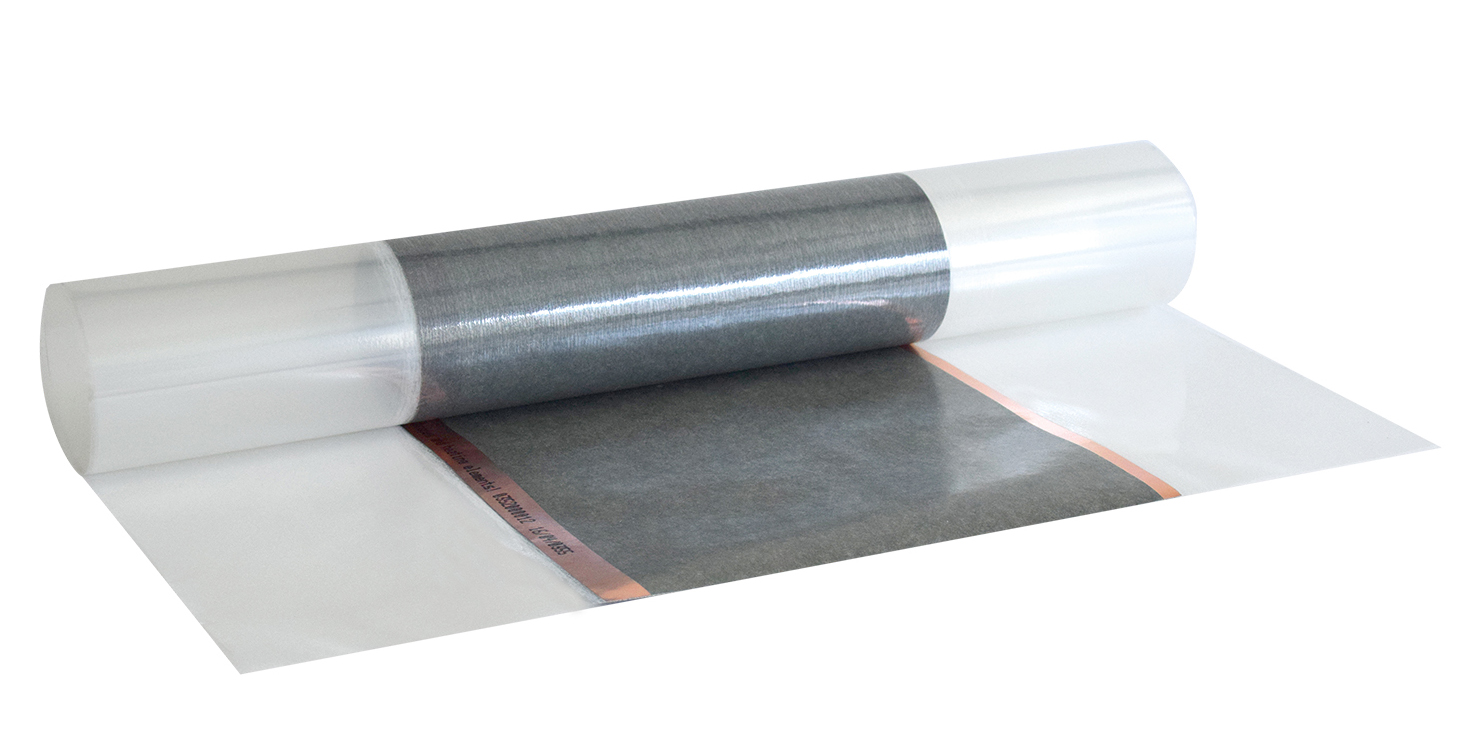
Drytec is the latest evolution of the cutting-edge sustainable heating technology from Energy Carbon Drytec harnesses the power of far infrared energy to safely heat homes far more quickly than traditional alternatives. Designed by experts at the University of Stuttgart, and made using recycled materials, Drytec can be fitted behind the plasterboard by a single person, without the need for wet trades. Once installed, Drytec can deliver thermal comfort at temperatures up to four degrees lower than conventional heating, while improving air quality by removing the convection roll that sees many heating systems raise dust and other allergens. The BSRIA-tested, TUV-accredited system has an expected lifespan of over 50 years, making for excellent cradle-to-grave credentials. Drytec can heat rooms, while retaining low surface temperatures at point of delivery, thus protecting both the building fabric and homeowners from overheating. Perfectly suited to the fast-growing modular housing market, Drytec is the quick, convenient and sustainable heating solution for the net zero age. If you’d like to learn more, don’t hesitate to get in touch! Email us at hello@energycarbon.co.uk or call 0203 507 1659.
With its Future Homes Standard, is the government missing a trick?
In January, as millions of people adjusted to life under the third national coronavirus lockdown, the government quietly released a document with sweeping implications for the future of UK construction. It was its response to a 2019 consultation it held on its Future Homes Standard – Whitehall’s attempt to dramatically reduce the environmental damage caused by Britain’s houses and its housebuilding sector, as part of broader efforts to achieve net-zero carbon by 2050. The Standard’s aim is simple, but far-reaching. It’s designed to cut the carbon produced by the average new-build house by between 75 and 80% in the coming years – something that would make a huge contribution to that quest for net-zero. Originally, ministers had intended to introduce interim measures in 2020 to strengthen Building Regulations as a stepping-stone to the full Future Homes Standard. These measures would aim to cut the carbon emissions of the average new-build by 31%. Unsurprisingly, given the vast disruption caused by the coronavirus pandemic, this was postponed. In its consultation response, however, the government announced that this interim phase would begin in 2021. Details will be finalised by December 2021, before coming into force officially in June 2022. The wheels starting to turn? We also got some much-needed clarification about exactly what the measures would entail. With its interim ‘stepping-stone’ to the full Future Homes Standard, the government’s aim is to ensure that new-built homes are not installed with fossil fuel heating after 2025, and won’t require further retrofitting to make them fit for 2050. The government is also set to close the loophole that’s previously allowed builders to only have to meet the energy efficiency standards that were in place when a development first started, even if those standards change in the meantime. From now on, rules will apply to individual buildings, not whole developments. These are all extremely welcome moves. It feels like, finally, the wheels of the urgently-needed net-zero transition are starting to turn. However, there are aspects of the government’s proposals we’re less impressed with. No magic bullet In their consultation response, ministers explicitly say that “low carbon heating systems will be integral to the specification of the Future Homes Standard”. However, they then go on to say that “we anticipate that heat pumps will become the primary heating technology for new homes”. At Energy Carbon, we’ve long been arguing that there’s no magic bullet solution to low-carbon heating, and that in 2050, we’re likely to draw on a variety of different technologies to help us heat homes both sustainably and efficiently. We believe that air-source and ground-source heat pumps have their place – but they come with their own issues. The first relates to their longevity. Heat pumps aren’t just very expensive, they require increasingly expensive annual maintenance visits, and even then, a heat pump product installed today is likely to need replacing a number of times between now and 2050. That means a huge amount more embodied carbon (a yardstick of sustainability that the government short-sightedly aren’t using as part of the Future Homes Standard as it stands) – and many heat pump products use refrigerants that themselves contribute to global warming when they’re released into the atmosphere. What’s more, heat pumps are extremely complex products – meaning any maintenance or replacement work requires the services of specialist engineers, who, for the moment at least, are very few and far between. We therefore believe that the government is being very short-sighted by presenting this one heating technology as the solution to a complex problem – a problem likely to need all sorts of different systems to properly address. The case for infra-red So far in any of its documentation relating to the Future Homes Standard, the government is yet to mention the huge potential of our own area of expertise – far-infrared. Infrared refers to a division of the electromagnetic spectrum. Within that division, there are three types of infra-red radiation: near infrared, mid infrared and far-infrared – and it’s far-infrared that’s by far the most beneficial for heating homes and its occupants. In fact, it’s the exact same frequency of light called ‘the light of life’ generated by the sun, invisible to the naked eye, but capable of warming us directly. Far-infrared radiation warms all the surfaces and objects in a room, rather than the air – and those surfaces and objects then go on to radiate heat themselves. The embodied heat gathered in these areas slowly releases back into the room, letting occupants turn down the thermostat. This in turn allows for a very fast reaction time to perfectly control the room temperature. Its fast reaction times mean occupiers feel the benefits within minutes of the thermostat switching back on – saving energy, and cutting carbon emissions. We believe it can make a major contribution to the collective effort to reach zero carbon by 2050 – and we call on the government to seriously consider promoting its use as part of the Future Homes Standard. For further information, please call 0203 507 1659 or contact us at hello@energycarbon.co.uk.
Green building pioneer embraces Energy Carbon’s far infra-red heating
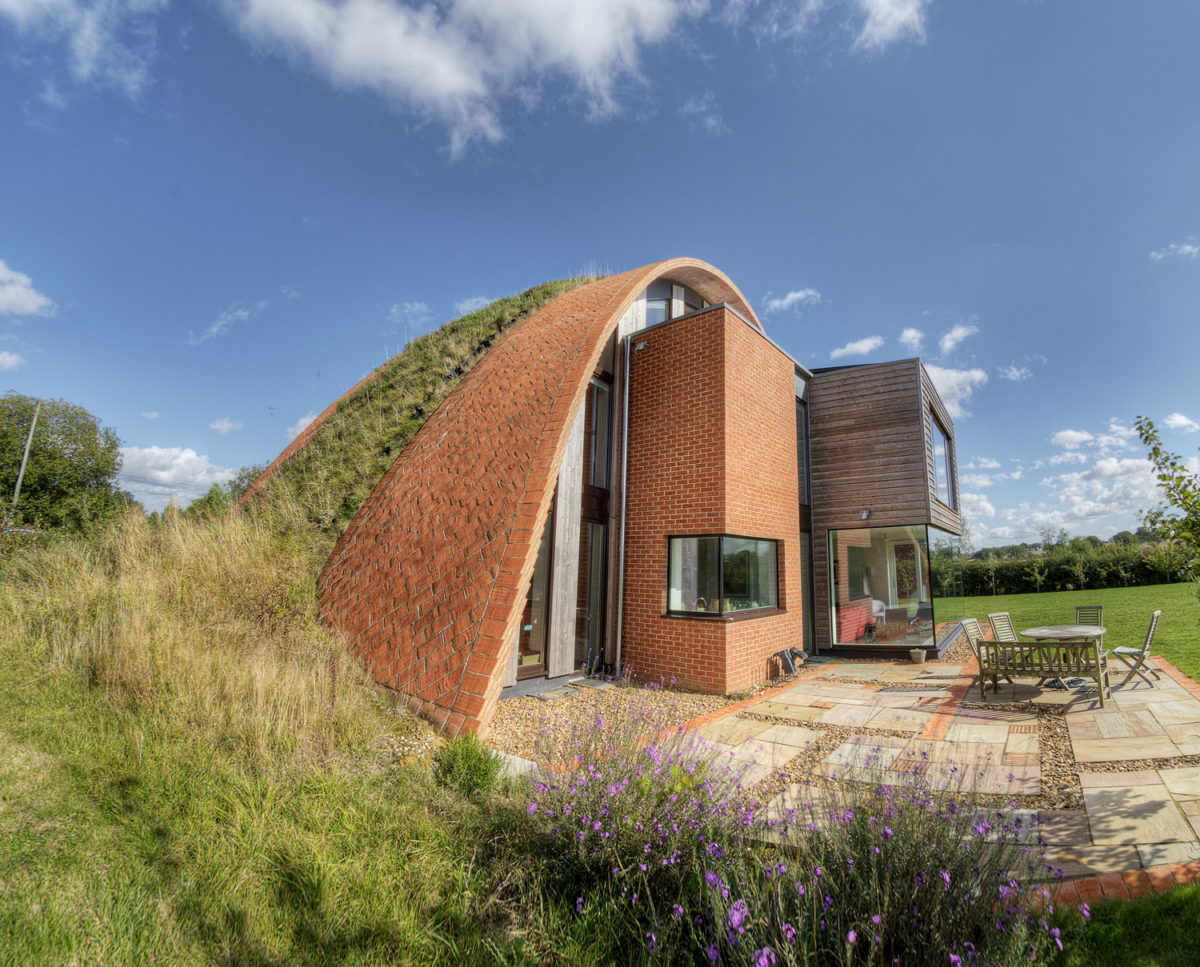
Richard Hawkes is a man who knows promising sustainable tech when he sees it. The founder and driving force behind Hawkes Architecture, Richard first came to prominence for an ambitious self-build passive house featured on Channel 4’s hit TV show Grand Designs way back in 2009. In the years since, Richard has gone on to become a pioneer in ingenious, sustainable building – and when he first came across the innovative far infra-red heating technology supplied by Energy Carbon, he immediately wanted to learn more. Richard is the UK’s foremost expert on Paragraph 79 – the section of UK planning law that lets architecturally outstanding, environmentally-friendly buildings be constructed in places that more conventional designs wouldn’t. Heating is the most carbon-intensive aspect of Britain’s built environment – and with heating tech that’s quick to work, uses very little electricity and is easy and inexpensive to install, Richard knew he could make future projects more sustainable than ever before. “I was blown away by the Energy Carbon tech when I saw it up close,” Richard comments. “I could instantly see it had huge potential, not just for the kind of projects we work on, but to help the UK reduce the carbon impact of heating in the years ahead.” “I wanted to find a way of quickly demonstrating the technology to my clients – and after speaking to Rod and Nick at Energy Carbon, they agreed to fit out my main meeting room with the heating fleece.” “That way, I can bring people in to a warm, comfortable room, explain the concept behind far infra-red heating, and then point to the ceiling and say ‘that’s what’s heating you right now!’” Rod Davies of Energy Carbon comments: “We’re absolutely delighted that Richard has taken such a keen interest in the heating technology we provide.” “We’re huge admirers of his work, and with him on board, we’re confident that our products will soon be part of some of the country’s most sustainable, architecturally outstanding buildings.” If you’re interested in learning more, don’t hesitate to get in touch – call 0203 507 1659, or email hello@energycarbon.co.uk today.